Forty factory sounds from the 1982 manual, on proper keys. And Dillo, our 303, right next to it.
BB–37 turns the SMK-37 into Telegram, our take on the SH-101, and Dillo, our take on the TB-303, with an 808 to play against. 112 Telegram patches and 329 phrases. 106 Dillo sounds and 1,136 patterns. Pick one and play, or turn a knob and make it yours. No computer needed.
Written for the Elite. Not ported to it. Telegram’s 101 voice, every screen, the controls and the Band were built for this keyboard: its thirty-seven keys, its eight knobs, its sixteen pads. Nothing was squeezed on from another box. Dillo and the 808 share their sound engine with Big Beat Studio, which is why they sound like family.
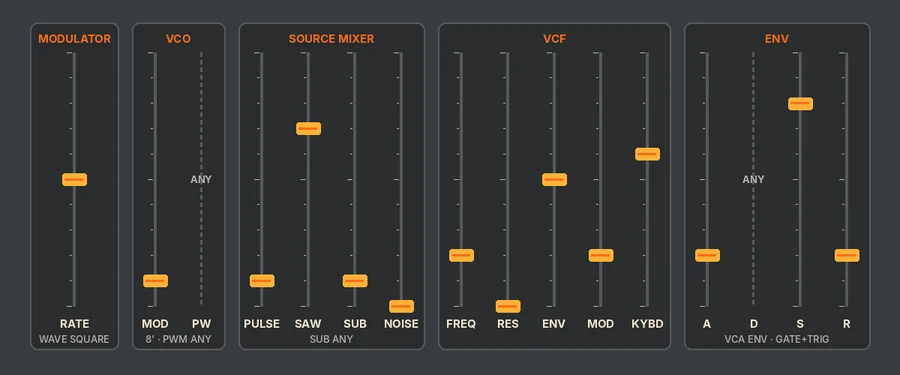
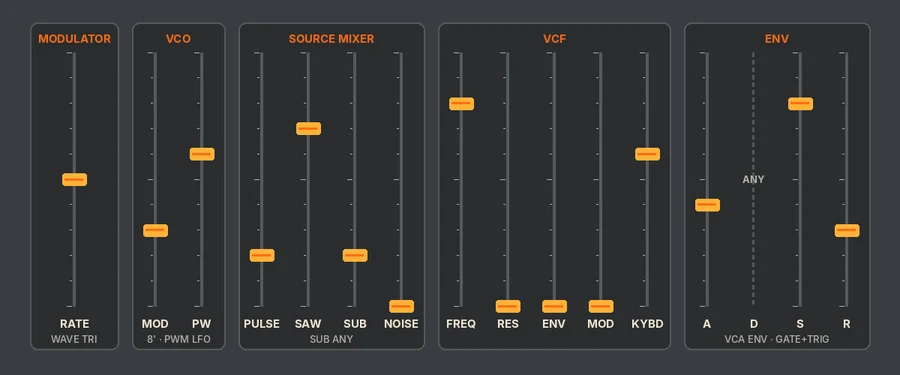
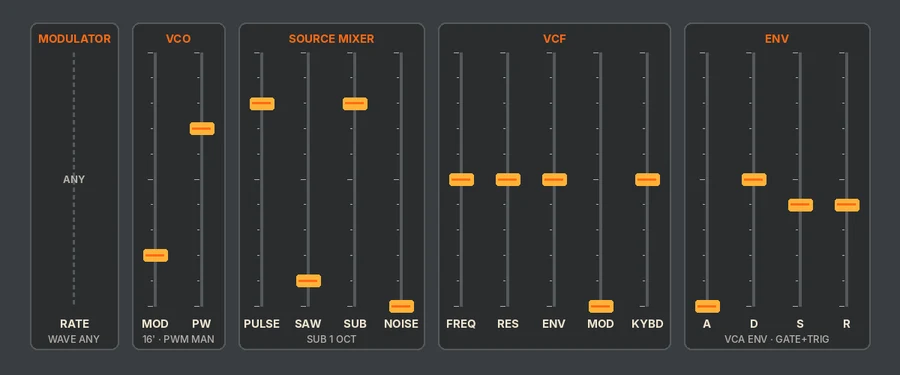
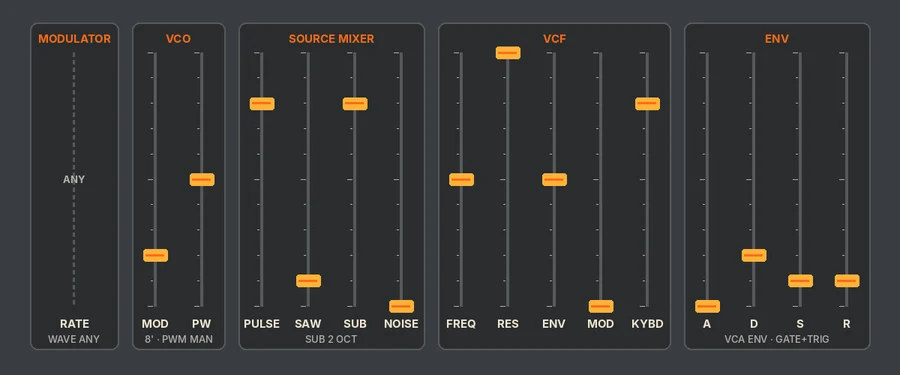
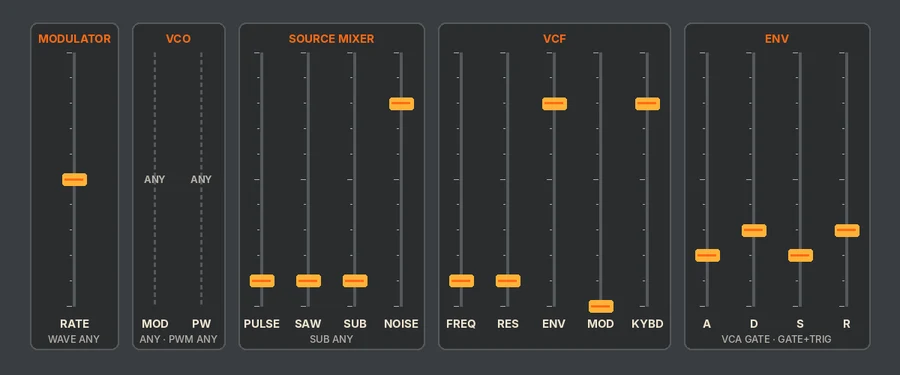
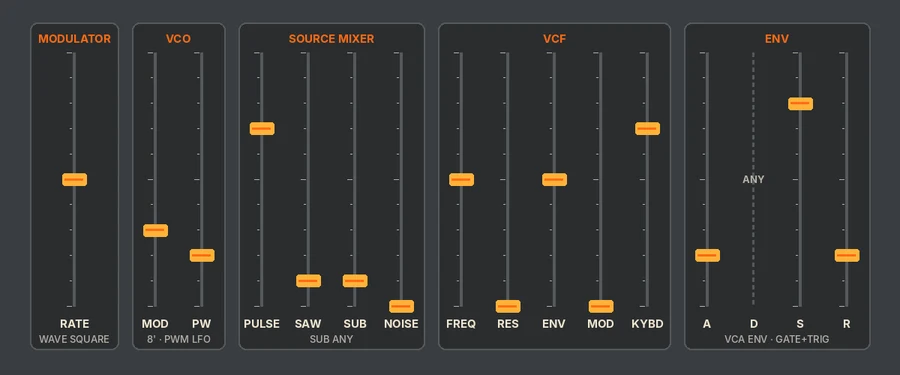
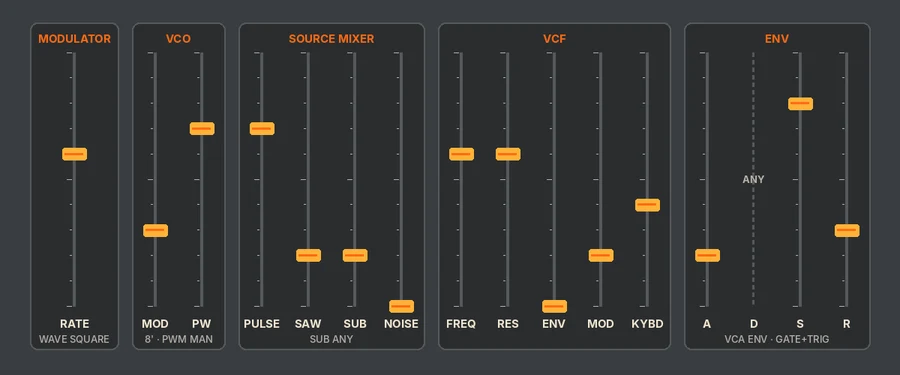
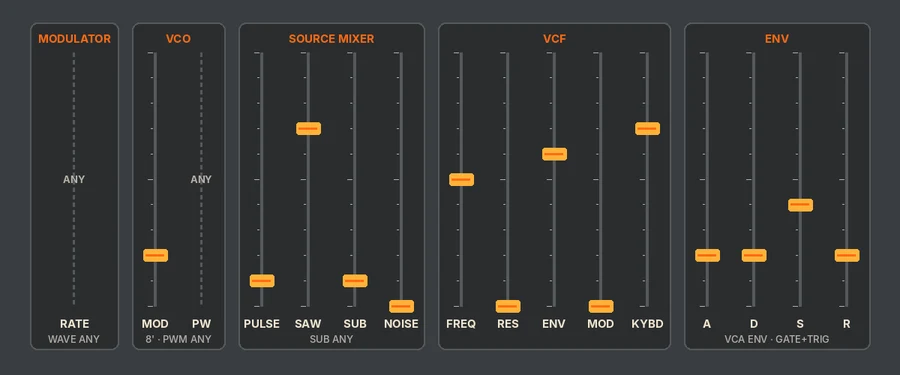
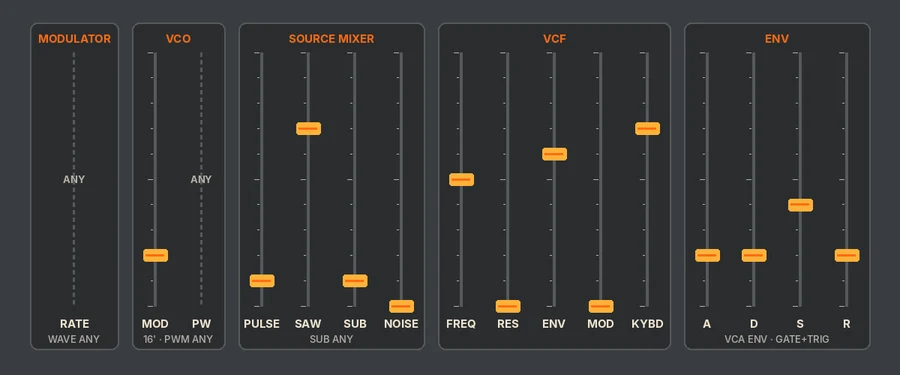
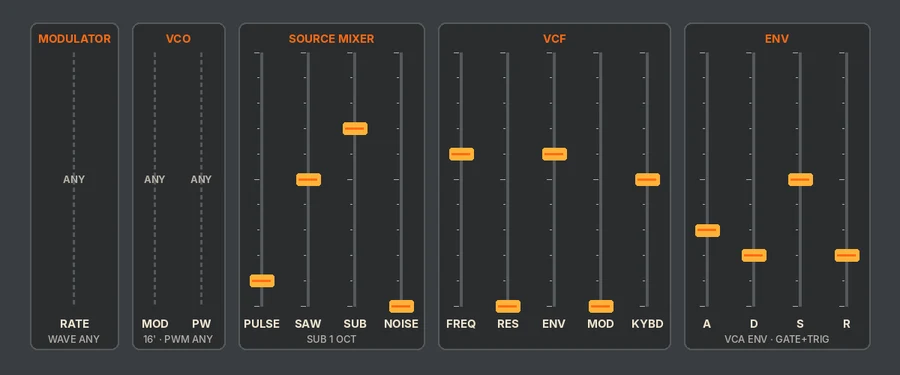
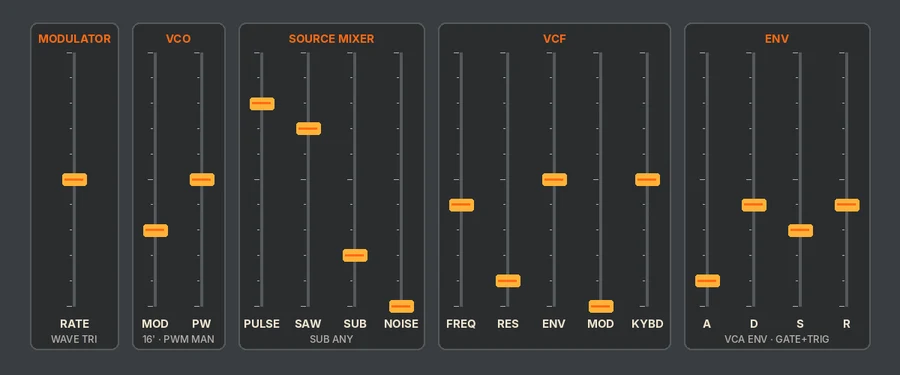
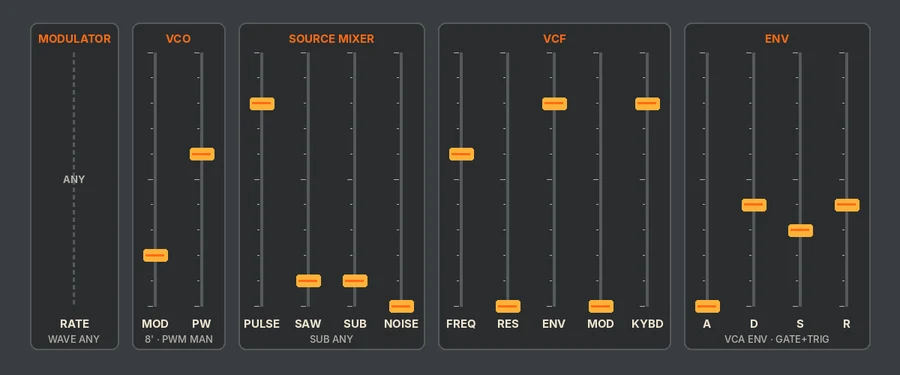
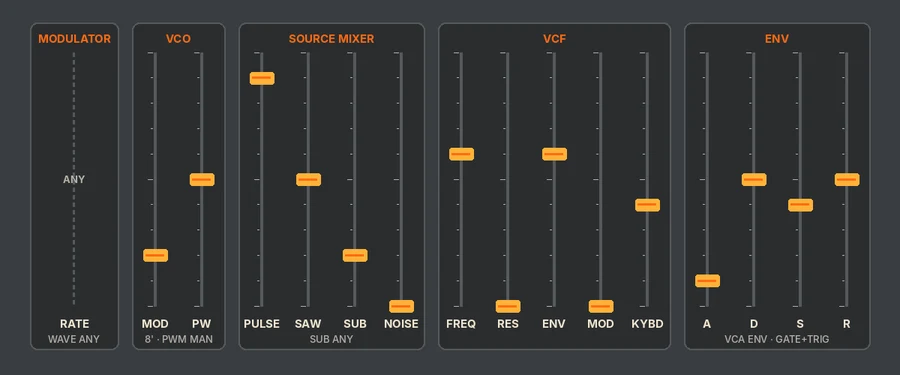
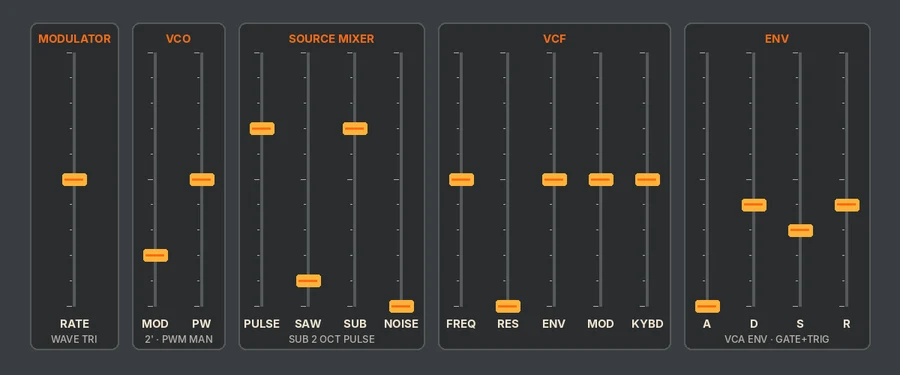
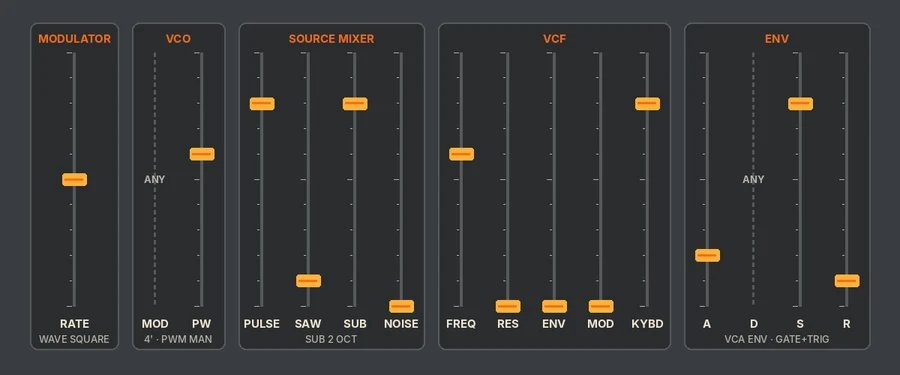
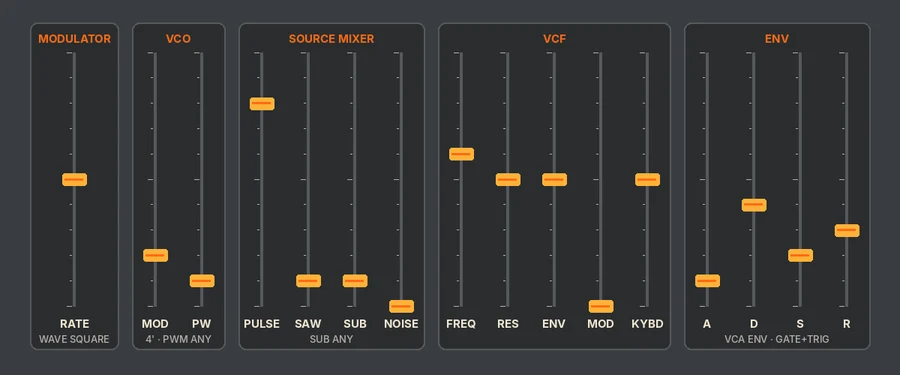
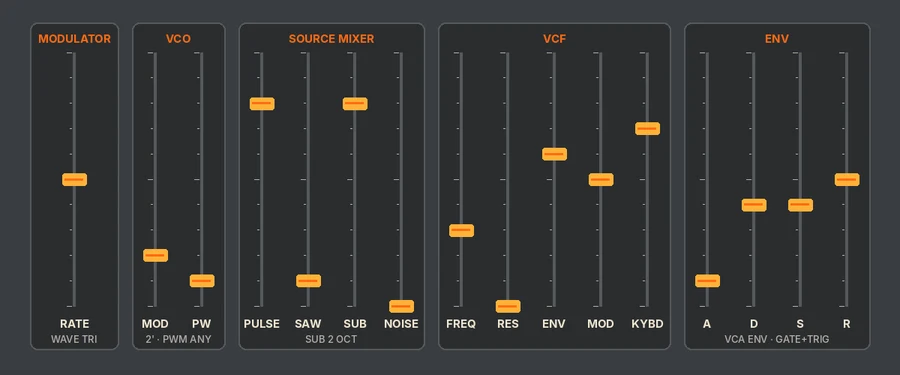
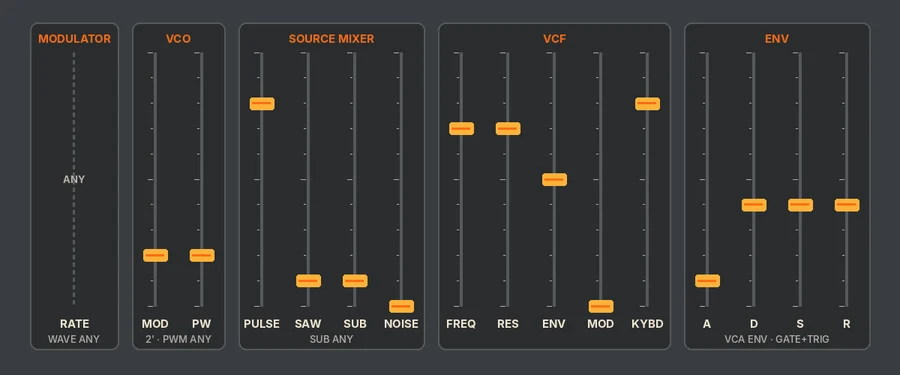
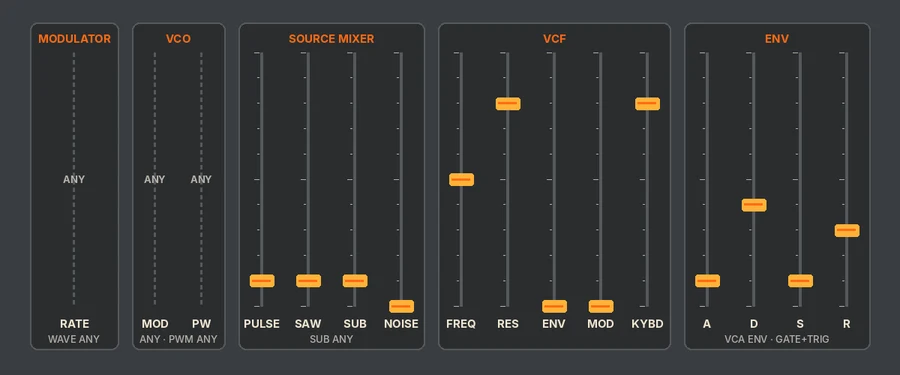
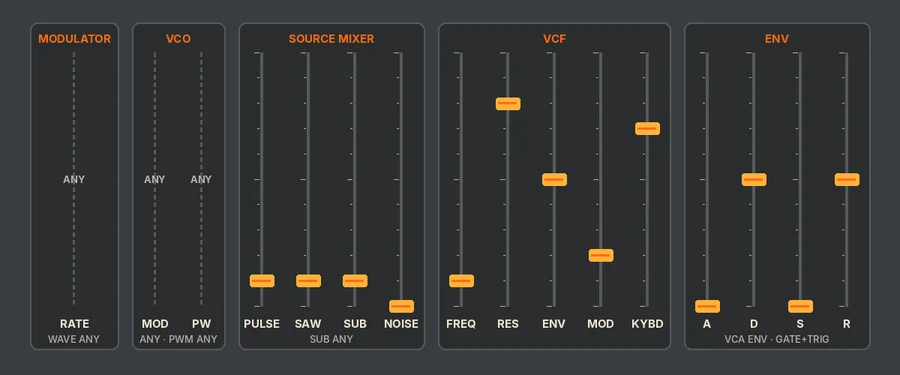
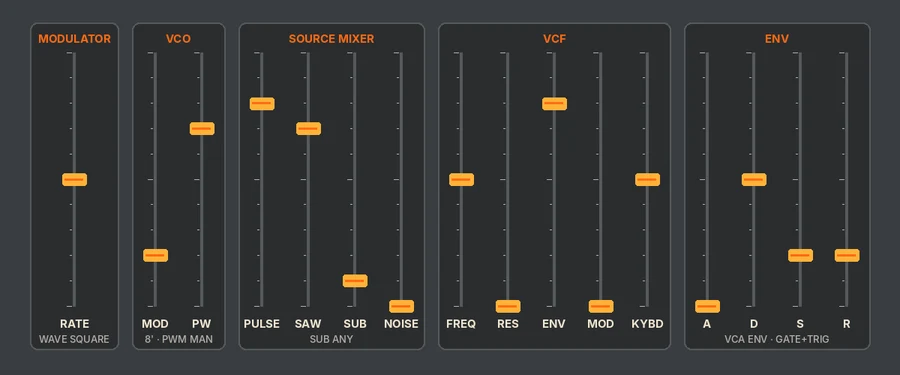
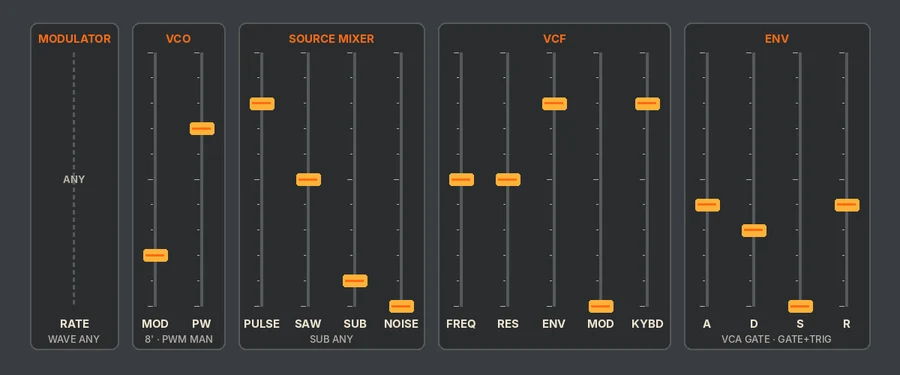
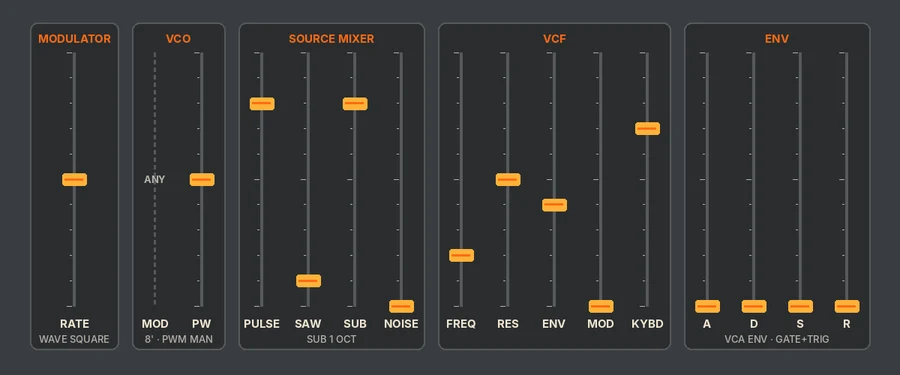
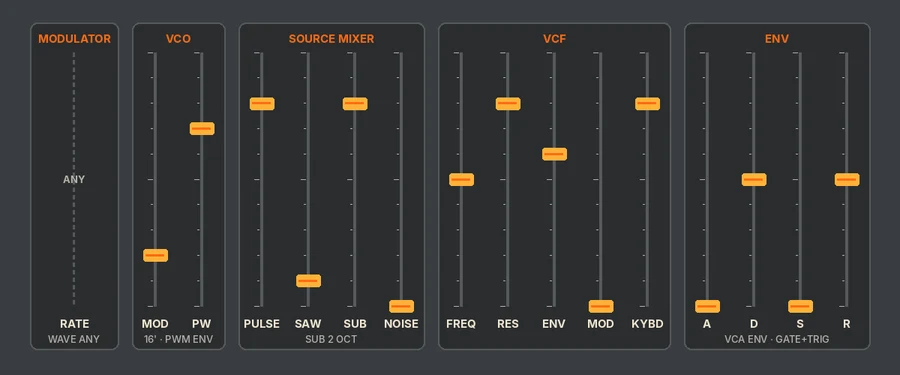
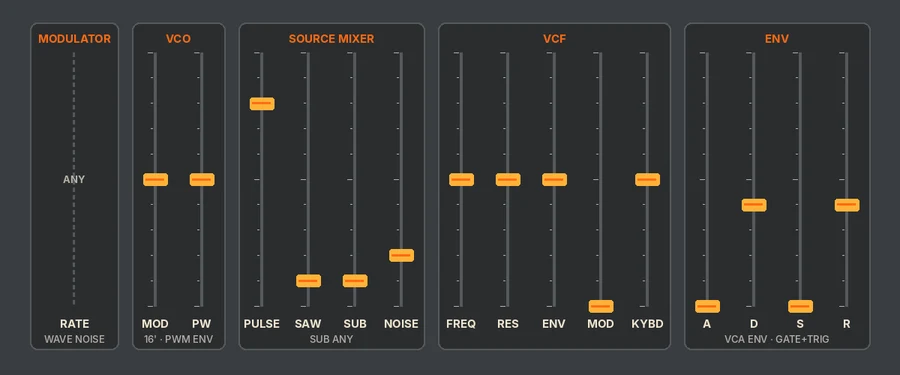
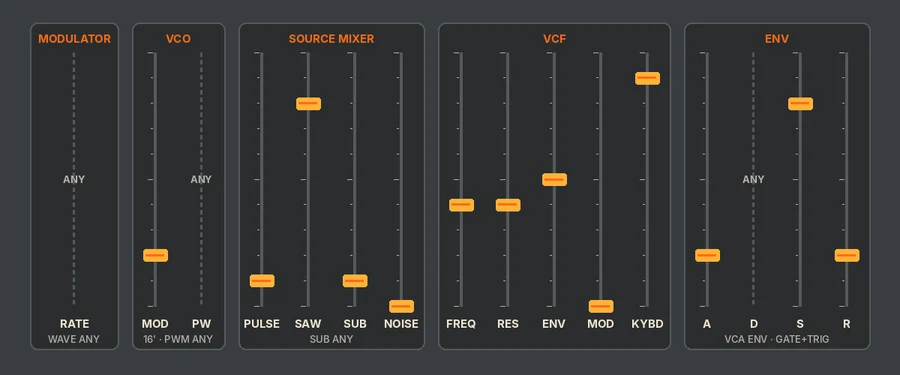
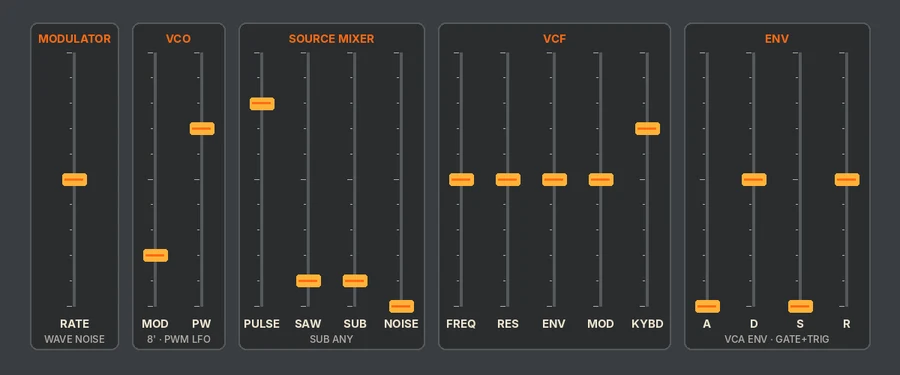
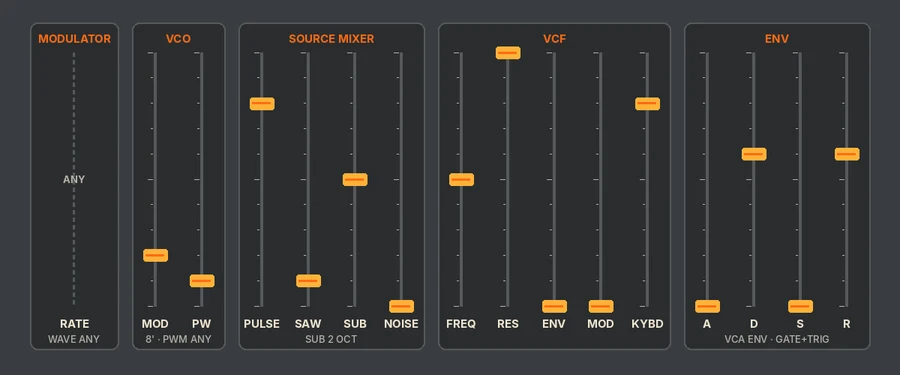
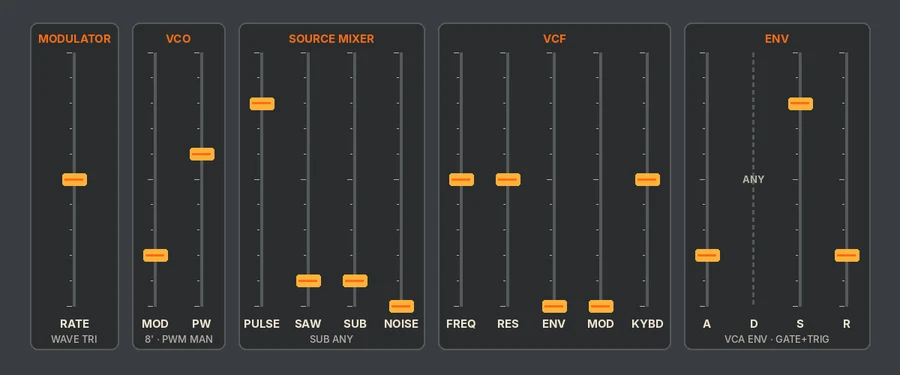
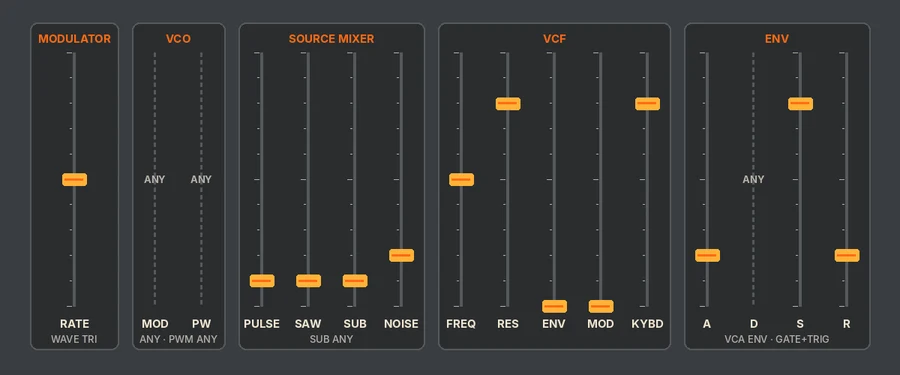
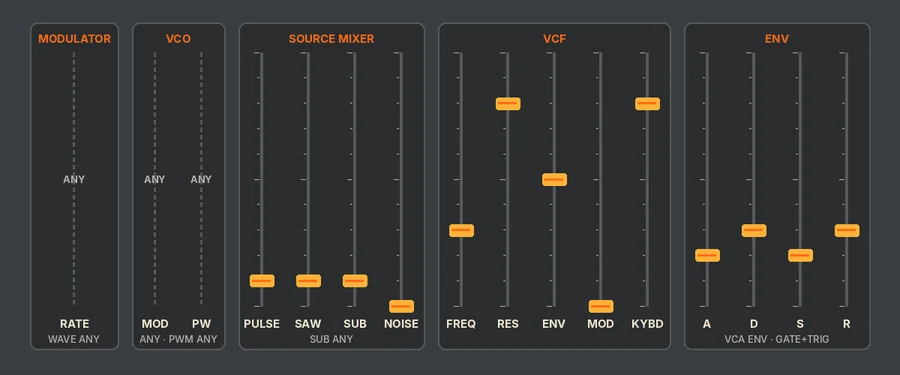
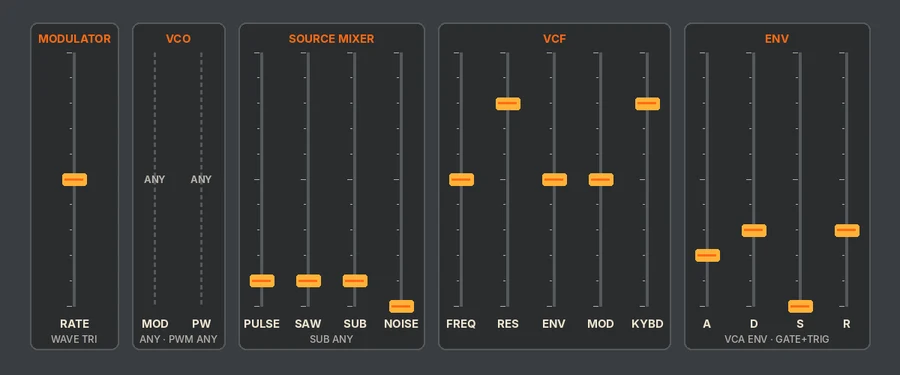
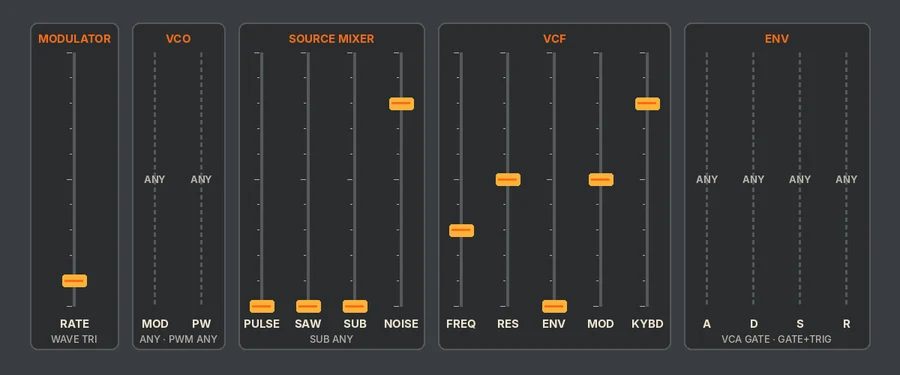
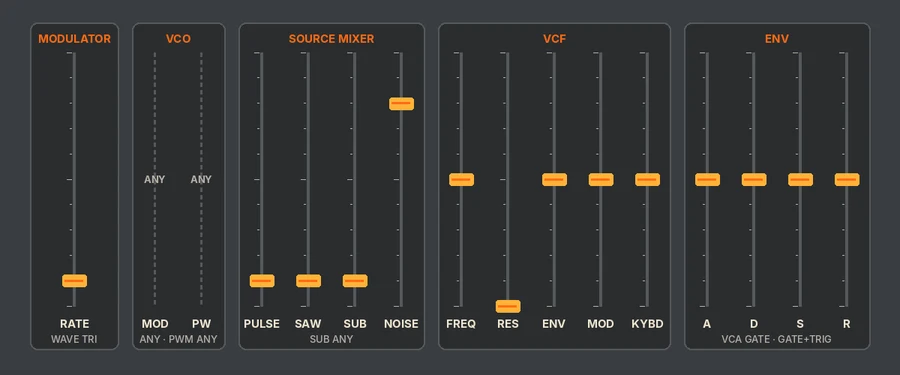
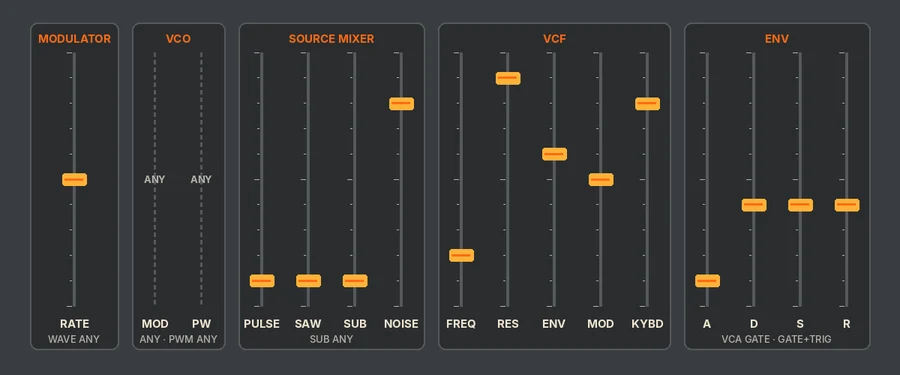
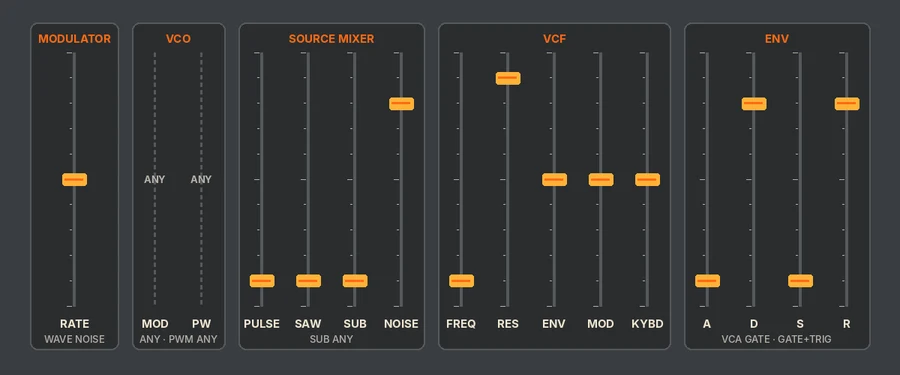
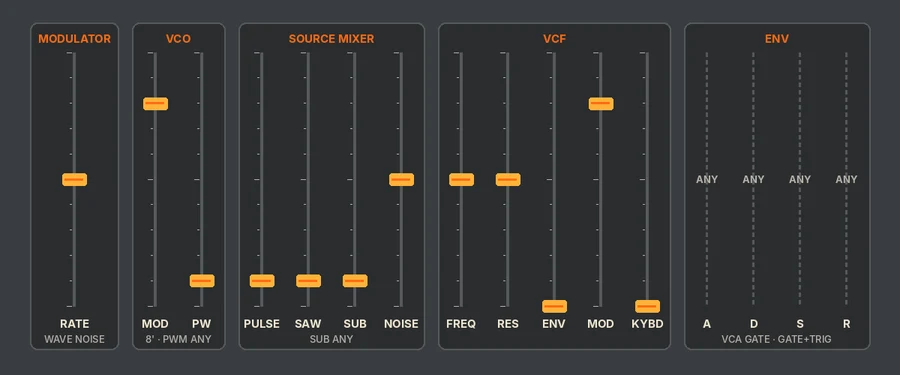
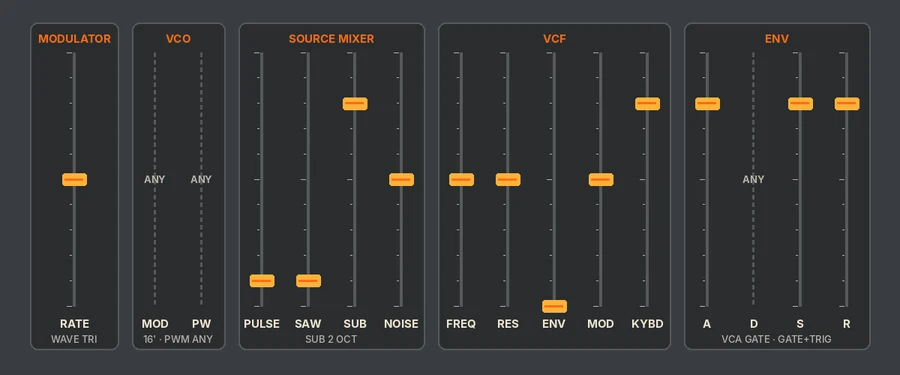
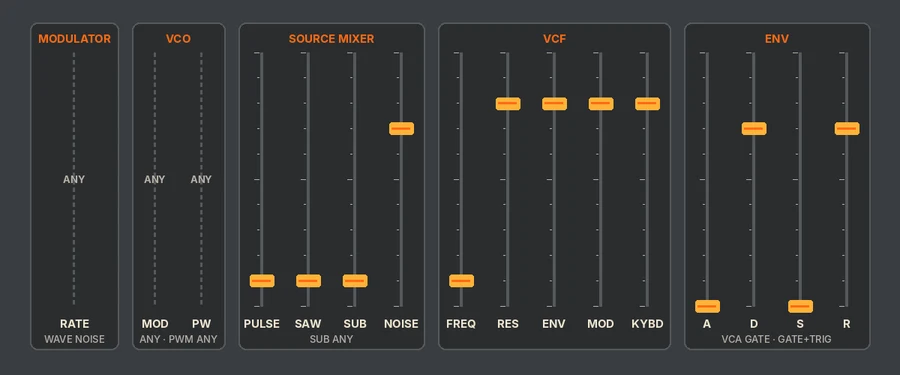
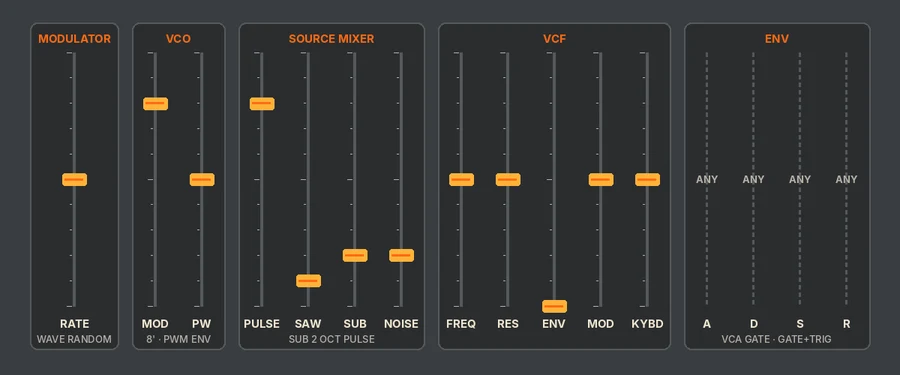
In 1982 Roland printed forty sounds in the SH-101 owner’s manual. Each one is a chart of slider positions, with a note saying the positions are approximate and your ears should finish the job. We took every chart, had it read twice, and set Telegram from it. Flute to Thunder, on banks 5 to 7, with eight patches readers sent to the magazines in the eighties.
01 Flute
Cutoff low, saw up, a little growl from the modulator.
07 Violin
AUTO glide and legato, the way Roland asked.
27 Funky Bass
Cutoff, resonance and envelope fighting it out.
21 Jazz Organ II
The filter screaming on its own, tuned against the oscillator.
34 Steam Locomotive
Noise, hold, and a train leaving.
1–8 Breath, brass and bow
Flute
Cutoff is critical; VCF MOD controls growl depth.
Clarinet
Cutoff changes colour; VCO MOD changes vibrato depth.
Oboe
Cutoff/resonance and pulse width must be balanced together.
Trumpet
Small changes in VCF ENV alter brightness; refine the brass colour with envelope depth and cutoff.
Horn
Set cutoff while listening; VCF ENV supplies subtle brass-colour changes.
Tuba
Use transpose DOWN; envelope attack is critical; refine VCF ENV.
Violin
Cutoff moves from soft to hard; use AUTO portamento around 3 and triangle-wave vibrato; adding saw changes the impression.
Electric Bass Guitar
Use transpose DOWN; cutoff and filter-envelope depth establish the character.
9–16 Pluck, strike and reed
Harpsichord
Pulse width changes the colour drastically; compare LFO- and envelope-driven PWM.
Electric Piano I
Cutoff and VCF ENV determine colour.
Electric Piano II
VCF MOD controls growl depth.
Accordion
Source-mixer proportions and cutoff both matter.
Xylophone
Cutoff and resonance are critical; Roland suggests two simultaneous keys with the arpeggiator on.
Vibraphone
The VCF modulation setting creates tremolo.
Glockenspiel
Tune cutoff and resonance carefully and play in the highest octave for the most convincing result.
Claves
Coordinate cutoff with envelope decay and release.
17–24 Synthesis reveals itself
Synthe Drum
Try triangle or square modulation, VCF MOD near 5 and a high modulator rate while playing.
Fuzz Guitar
Saw level changes the impression; perform bend and LFO modulation.
Funky
Cutoff and VCF ENV produce wide colour changes.
Jazz Organ I
Create key click by putting ADSR at zero, using envelope control of the VCF and setting click level with VCF ENV.
Jazz Organ II
Treat filter self-oscillation as another sound source and tune it against VCO/sub at an octave, third or fifth.
Effect Sound I
Work with decay and release.
Effect Sound II
Noise modulates VCO pitch; VCO MOD controls the amount.
Funny Cat
Use non-legato articulation; Roland proposes decay 3 and sustain 2 as an alternate character.
25–32 Electronic colour
Pulsar
Cutoff drastically changes the colour.
Gong
Cutoff again makes the decisive change, within a different resonance/envelope state.
Funky Bass
Cutoff, resonance and VCF ENV interact strongly.
Synthe Voice
Set cutoff to taste and try a little portamento.
Whistle
Use triangle-wave vibrato and consider slight portamento.
Barking
Sustain around 7 creates a howling rather than clipped bark.
Chirping
Slowly move the modulator RATE slider up and down.
Wind
Turn HOLD on; resonance changes the impression.
33–40 The machine becomes a scene
Surf
Turn HOLD on and adjust VCF MOD and VCF ENV.
Steam Locomotive
Turn HOLD on; cutoff, VCF ENV and the played key change the result.
Machine Gun
Cutoff and resonance require delicate tuning by ear while the sound runs.
Space Sound I
Try envelope attack at 10.
Space Sound II
Turn HOLD on; raising saw in the source mixer changes the impression.
Boat
The lowest key produces the most realistic engine sound; refine the VCF.
Thunder
Roland printed the chart and no instructions. Play it low and let it roll.
Random Notes
The random modulator writes the tune. Hold a key and listen.
Charts drawn by us from the factory settings. Controls Roland left blacked out are marked ANY: set them where you like.
02 / NEW TO THESE TWO?
Two little boxes that changed music.
THE 101 / 1982
The lead you already know
Roland’s SH-101 was a small, affordable synth with one oscillator, one filter and a grip so you could wear it on stage. Easy to learn and hard to make sound bad, it became a lead and bass voice of synth-pop, house and techno. Telegram is our take on it.
THE 303 / 1981
The bass that failed, then won
Roland built the TB-303 Bass Line to play along with guitarists. Hardly anyone wanted it. Then Chicago producers found secondhand ones, turned the knobs too far, and the squelch they got became acid house. Dillo is our take on it.
03 / THE SYNTHS
Two classics. Thirty-seven keys.
TELEGRAM / OUR 101
If you’ve owned one, your hands already know.
One oscillator with saw, pulse, sub and noise on a mixer, the way the original did it. A four-pole filter with real bite. Pulse width from the LFO or the envelope, gate and trigger modes, auto glide that only slides when you play legato, an arp and a 100-step sequencer.
DILLO / OUR 303
The squelch is the point.
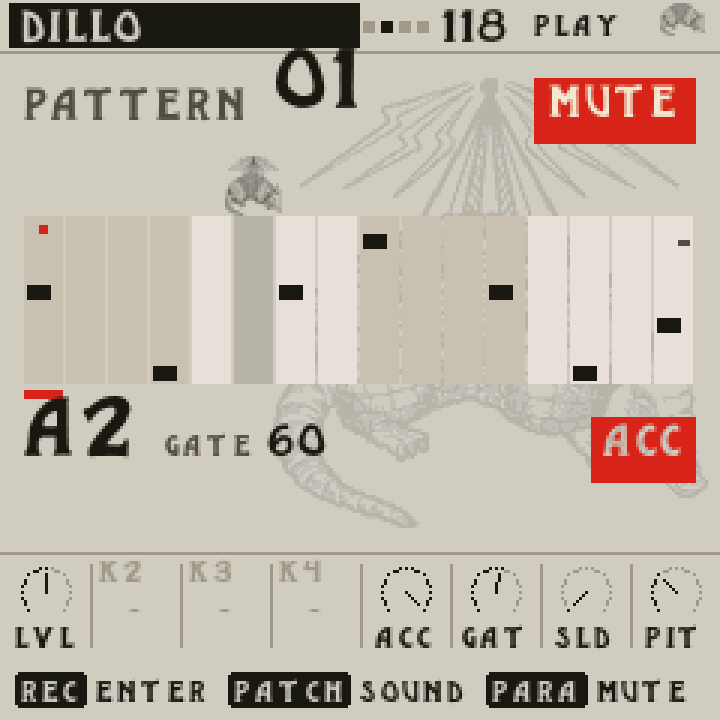
The saw and that odd square. The filter that sounds like nothing else. Accent that hits the filter harder the more of them you stack, and slide that glides into the next note, not out of it. Two Devilfish extras on the knobs: slide time and accent decay.
808
Something to play against.
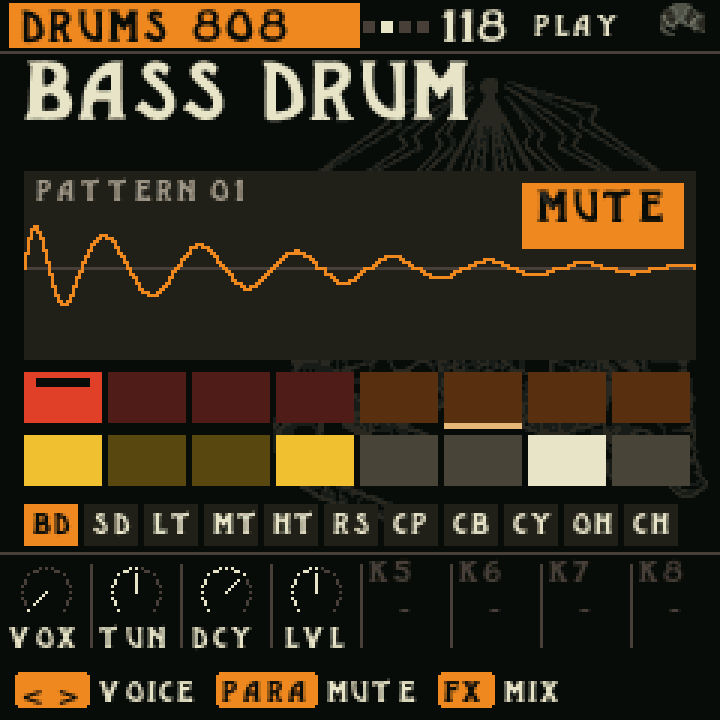
Sixteen sounds, synthesised live, from the kick to the congas. It keeps time while you play the synths. Next to an FM-1 running BB1, the FM-1 is the drum machine and BB–37 is the synths.
BAND
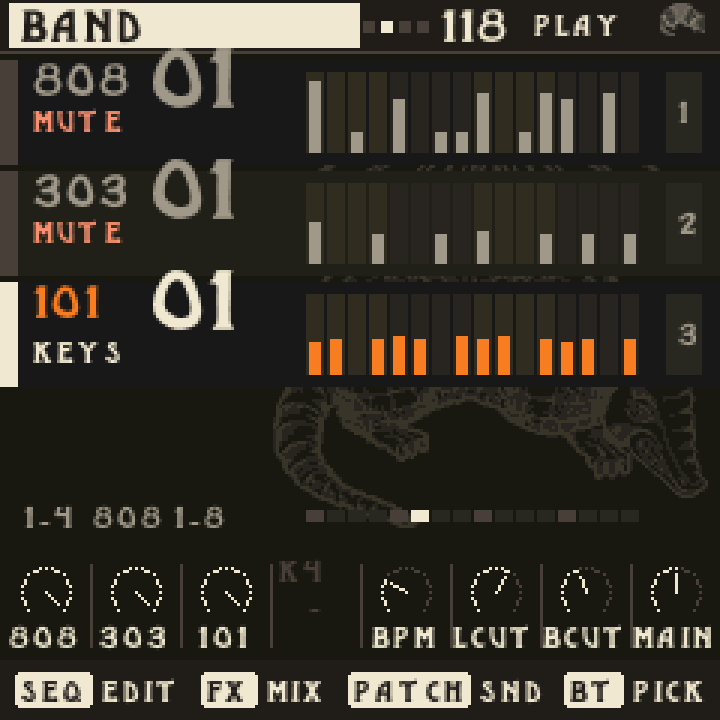
All three on the pads.
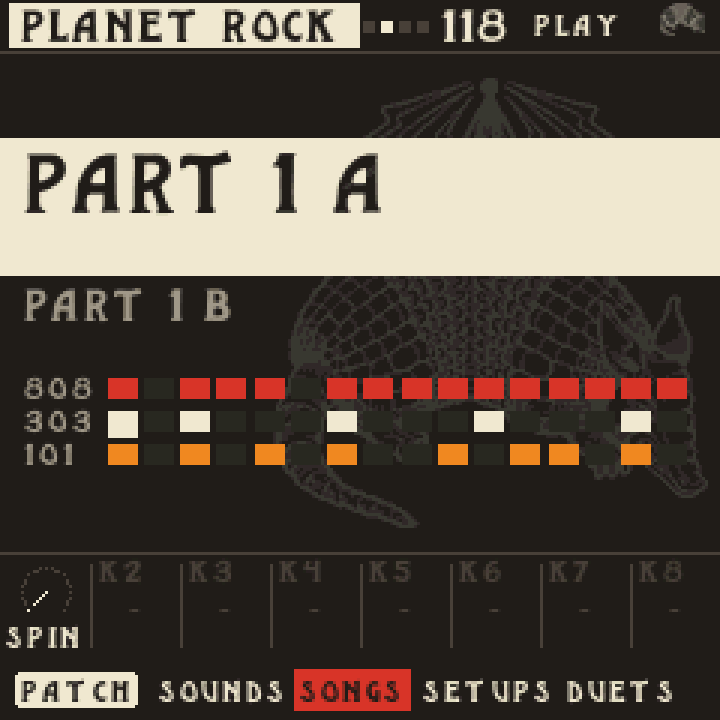
Cue a Telegram, Dillo or 808 part and it changes on the next bar. Save a setup, bring it back mid-song.
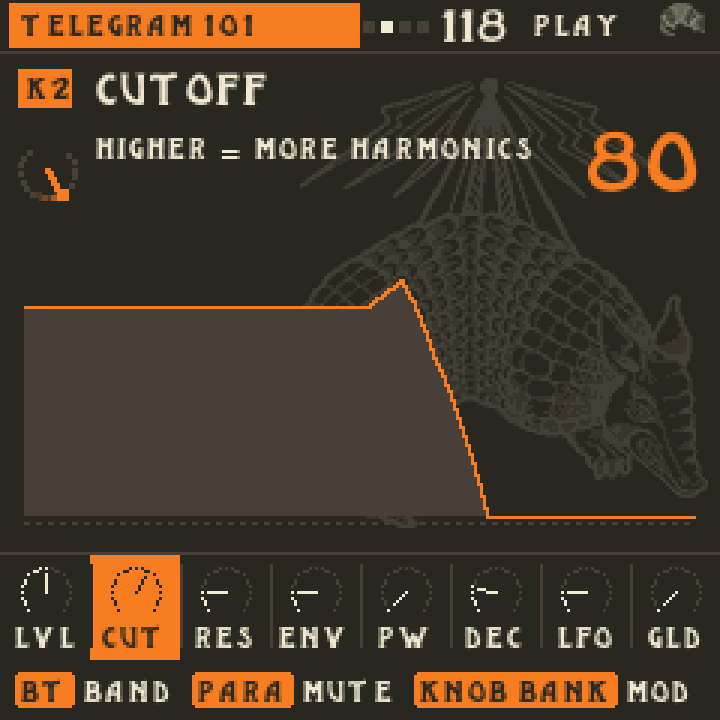
Host renders of the firmware’s own drawing code. Not photographs of the hardware.
04 / THE LIBRARY
Hundreds of sounds. Ready to play.
Every Telegram and Dillo sound from Big Beat Studio is in here, with the phrases and patterns to go with them. Spin K1 through the shelves and each one tells you what it is and how to play it. Start with a preset, then take it somewhere else.
112
Telegram patches
Roland’s forty 1982 factory sounds, eight period magazine patches and 64 of our own.
329
Telegram phrases
Lines from the BB1 songs and Big Beat Studio.
106
Dillo sounds
From hollow dub to full Devilfish scream, with every Dillo voice from Big Beat Studio.
1,136
Dillo patterns
Acid lines, song basslines and era studies.
1,056
Band presets
Telegram, Dillo and 808 together, from the BB1 songs and eras.
05 / THE SCREEN
Turn a knob. Watch it happen.
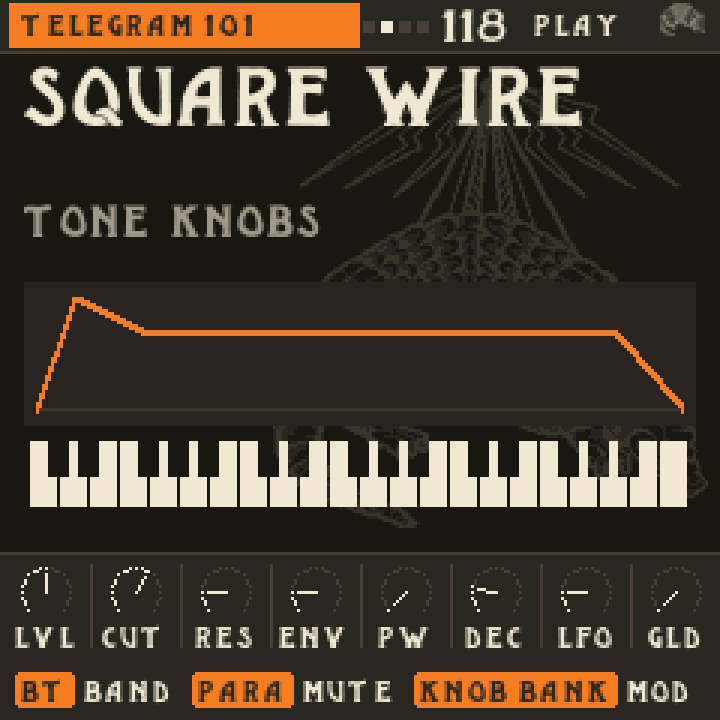
Big type you can read from the back of the room. Turn a knob and the screen shows the sound changing. Hit a pad and it flares. Dillo is on every page, because somebody has to supervise.
06 / HEAR IT
Don’t take our word for it.
Three Acid Duets from the Library, rendered by the BB–37 firmware itself. Dillo underneath, Telegram on top. Nothing added.
Neon EdgeElectro stabs over a rolling acid line.Silver PWMRobot octaves, answered high.Key BrassA brassy hook that stays out of the bass’s way.
07 / NEXT TO BB1
The drums go there. The synths go here.
BB1 turns the FM-1 into two drum machines. BB–37 is where the 101 and the 303 live, on proper keys. They share the same Dillo, the same Telegram and the same Big Beat songs, so the two were made to sit side by side.
Everything sits on the knobs, pads and keys you already have. The strip at the bottom of the screen always says what the eight knobs do.
K1–K8
Eight knobs in a row, labelled on the screen. Turn one and watch the sound change.
PADS
Sixteen pads in two rows. In the Band, a pad cues a part on the next bar, and the screen shows which row belongs to which player.
KEYS
Play Telegram or Dillo live. A held key takes over from the part, then hands it back.
K1–K8 ON TELEGRAM
Level, cutoff, resonance, envelope, pulse width, decay, LFO and glide. KNOB BANK flips them to the modulation page.
PATCH
Opens the Library: sounds, patterns, songs and Acid Duets.
K1 IN THE LIBRARY
Spins the jukebox. Land on something and the screen says what it is.
PARA IN THE LIBRARY
INFO: the list, what it is, and how to play it.
09 / GET BB–37
Install BB–37. Play the synths.
Connect your SMK-37 with a USB data cable to a Windows, macOS or Linux computer and open the installer. It identifies the keyboard and installs the matching BB–37 package. No Terminal, nothing to set up first.
BB–37 supports the SMK-37 Pro, SMK-37 Elite and MKE-P37.
10 / CREDITS
The small print.
BB–37 is free software under the GNU GPL v3. Source code (GPL v3). Screen type: Picnic by Taylor Rushing. Acid Tabs phrases by J. McConaghy / Acid-Tabs.com (CC BY-SA 4.0); Acid Voice pattern charts used with permission. M-VAVE, SMK-37, Roland, SH-101, TB-303 and TR-808 are trademarks of their respective owners. BB–37 is an independent project, not affiliated with or endorsed by them. No warranty: you install it at your own risk.