Cumbia, salsa, merengue and bolero. In English or Spanish.
Compás turns the FM-1 into the rhythm section: drums, bass, hand percussion and a 727 full of bongos and congas. You lead from the keys: call the verse, the chorus or the break, and the band comes in on the phrase.
BAND + BASS + PERCUSSION + 727 + KUMBIA → ON THE BEAT
01 / THE BAND
Five pages. One rhythm section.
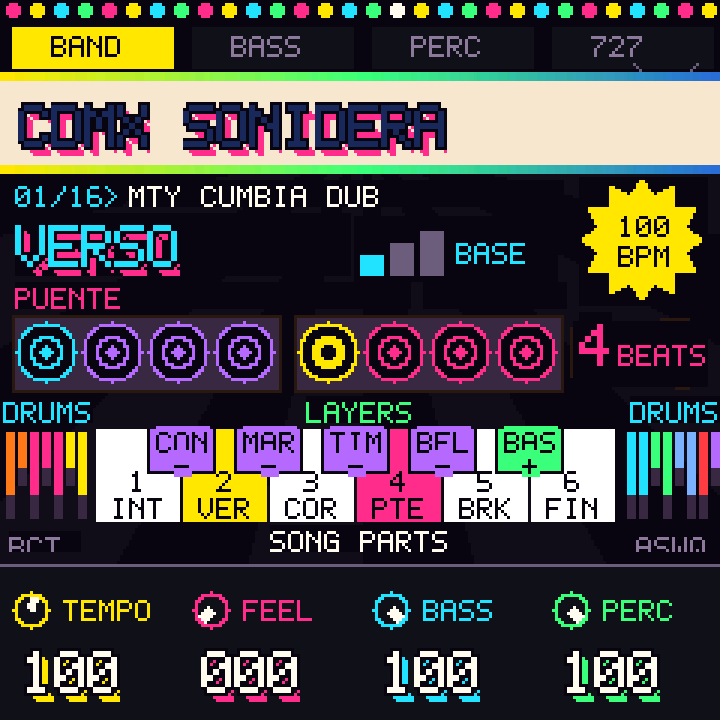
BAND
Call the section.
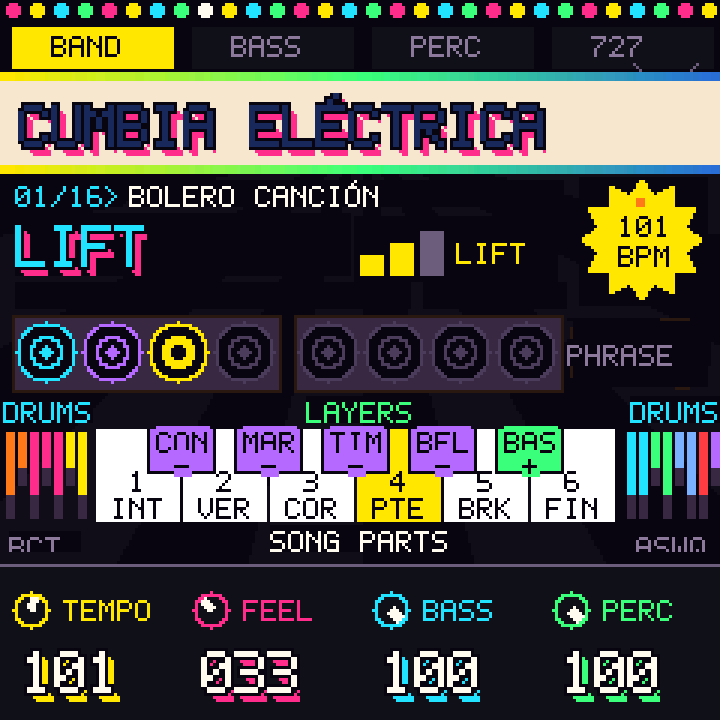
The center keys cue the song parts. The band waits for the phrase, counts you in on the horn and lands together. ALGORITHM moves the energy: base, lift, break.
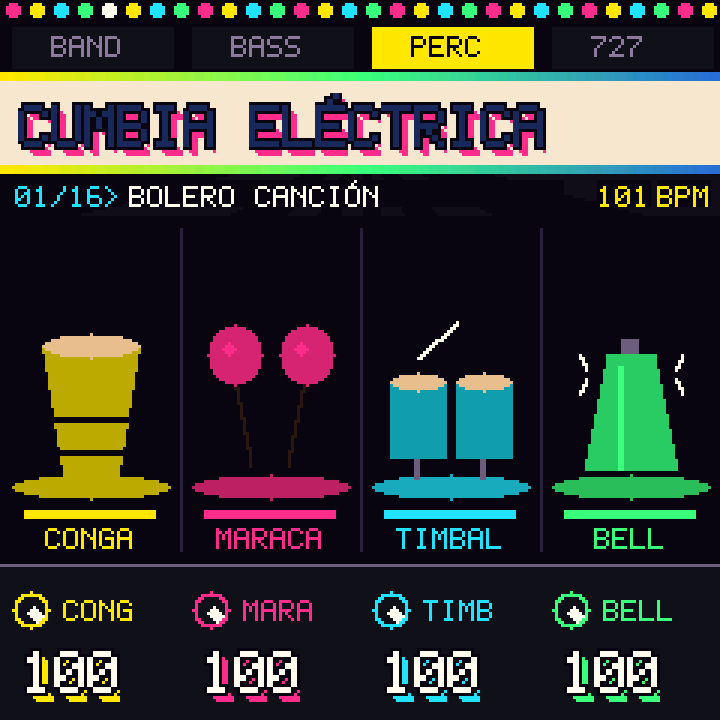
PERCUSSION
Conga, maraca, timbal, bell.
Each one comes in and drops out when you call it. Thin the band under a singer, then bring everyone back for the chorus.
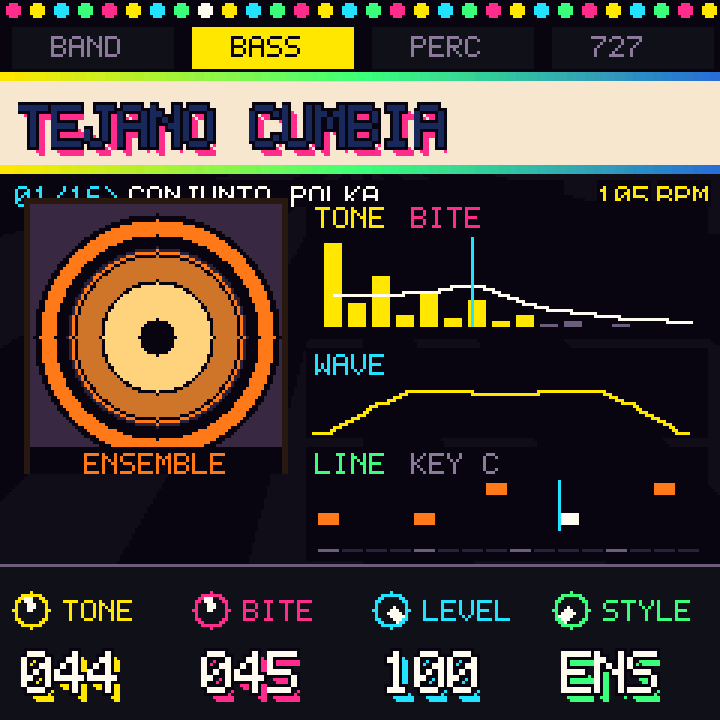
BASS
A bass that knows the clave.
Ensemble lines for every style, or flip to Acid and let it bite. Tone and Bite are right under your fingers.
727
Fifteen sounds. Hit them.
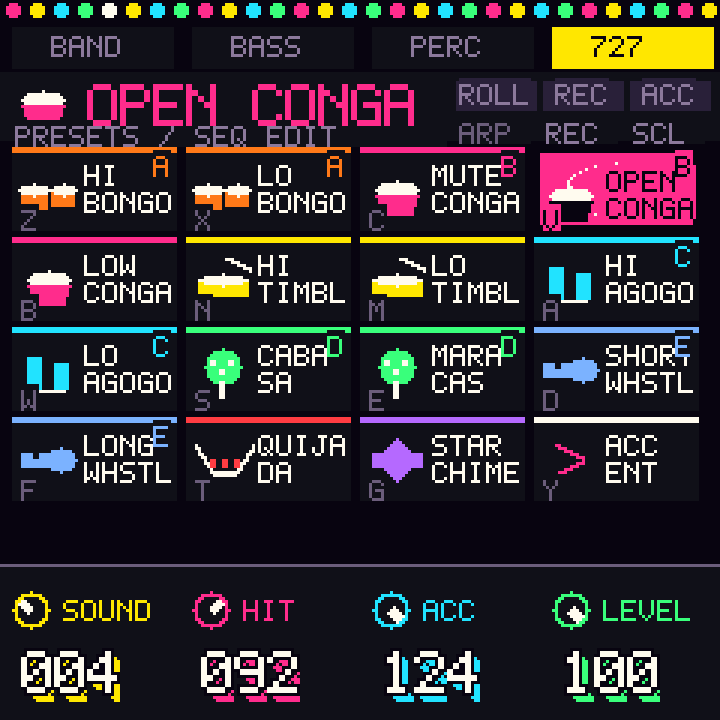
Bongos, congas, timbales, agogó, cabasa, whistles and the quijada on the pads. Twenty-nine complete rhythms on PRESETS, and a step editor when you want to write your own.
KUMBIA
Four sounds. Turn them up.
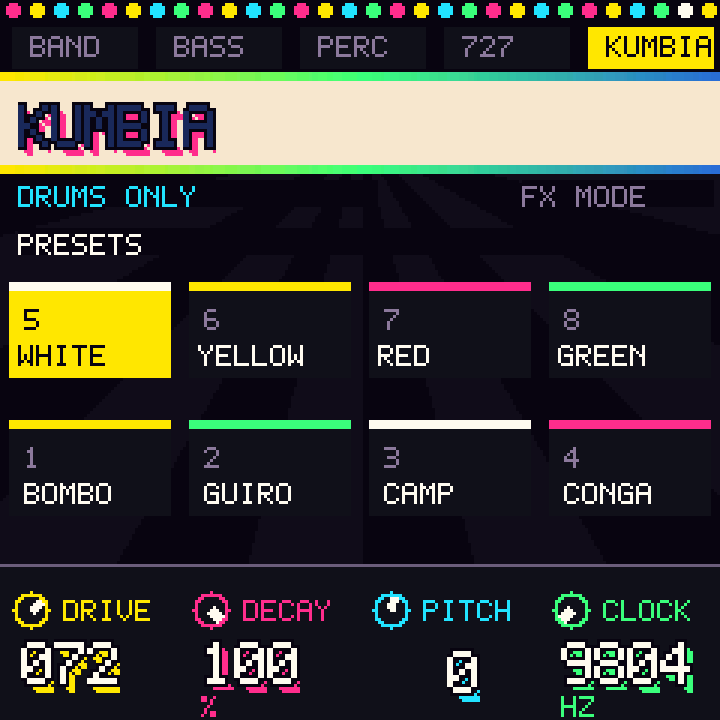
Bombo, güiro, campana and conga with their four factory patterns, from the Hanan Cumbia drum machine. Then push them further than the original goes: drive, decay, pitch and the sample clock itself. Play it alone or layered over the band.
02 / THE MUSIC
From the coast to the sound system.
29 GROOVE STUDIES
Cumbia, everywhere it went
The Colombian coast, Barranquilla and Soledad. Mexico City sonidera, Monterrey, Puebla and tribal guarachero. Lima, Buenos Aires and Chile. Salsa and son with the clave the right way round, merengue derecho and maco, bolero, tejano and conjunto.
28 WRITTEN SONGS
Play the standards
La Paloma, La Golondrina, Cielito Lindo, La Cucaracha, Siboney, El Manisero and more, arranged from their printed editions, with the melody guide on or off and the key wherever you sing it.
REBAJADA
Slow it down
Take the whole band down to sixty percent, pitch and all, the way Monterrey’s sound systems played their 45s at 33. Then bring it back.
03 / TAKE IT AWAY
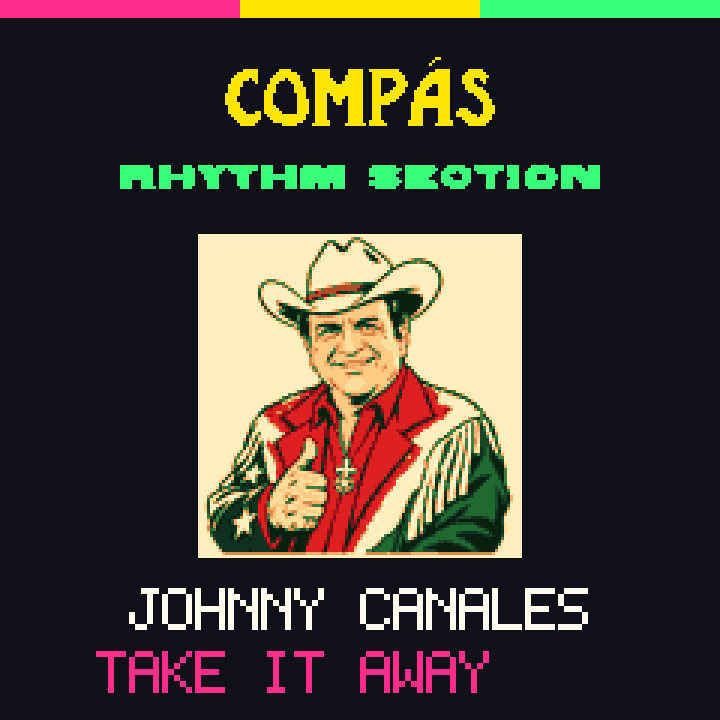
For Johnny Canales.
He started his show in Corpus Christi in 1983 and put Tejano, conjunto and regional Mexican bands in front of television audiences across the United States and Mexico. Then he got out of their way: “You got it, take it away!”
Compás opens with him, and he steps back in beside the beat lamps whenever a new song lands. The tribute set runs the band from Tejano cumbia to the standards.
04 / THE CONTROLS
Lead the band. Not the menus.
Everything you need on a stage is one press or one turn away. The screen shows what is playing, what is coming and how many beats until it lands.
PLAY
Start and stop. The band counts you in.
Center white keys
Song parts: intro, verse, chorus, bridge, break, ending. A part waits for the phrase.
ALGORITHM
Energy for the next phrase: base, lift or break.
SELECT
Band, Bass, Percussion, 727 and Kumbia.
PRESETS
The next song, any time. It lands on the boundary.
GLO
The set list. Sixteen songs, in your order.
FX
Mix, and REBAJADA: slow the whole band down, the way the sonideros do.
REC
The 727 pads.
GLO + ALGORITHM
English or Spanish. Every screen flips, mid-song if you like.
05 / TRY IT NOW
Play it in your browser.
The Compás engine, running in your browser: the same screen, the same band. Press PLAY, call a chorus and see if they keep up.
To return to official firmware, use the matching original M-VAVE package.
The small print
Compás is free software under the GNU GPL v3. Source code (GPL v3). Kumbia Kit sounds and patterns: Hanan Cumbia by Oficina de Sonido, based on Bleep Labs’ Bleep Drum, used under CC BY-SA 3.0. M-VAVE, FM-1, Roland and TR-727 are trademarks of their respective owners. Compás is an independent project, not affiliated with or endorsed by them. No warranty: you install it at your own risk.